AGP Executive Report
Last update: 4 days agoIn the last 12 hours, coverage touching Egypt is dominated by energy, telecom affordability, and climate/industry-adjacent developments. Egypt’s National Telecommunications Regulatory Authority (NTRA) ordered cheaper internet and mobile packages—cutting the fixed entry-level price to LE 150 per month (from LE 210) and introducing a LE 5 data package—while also keeping government and educational websites free even after monthly data allowances are used up. The same window also includes a new Egypt natural gas discovery in the Nile Delta (estimated around 50 Mmcf/d) following an offshore well drilled from onshore using advanced directional drilling technologies, framed as part of efforts to localize modern drilling methods and improve efficiency. On the sustainability/aviation side, Green Sky Capital formalized financing for a sustainable aviation fuel (SAF) production facility in Ain Sokhna within the Suez Canal Economic Zone, described as a step toward building a regional SAF industry.
Other recent items broaden the context beyond Egypt’s borders but still intersect with regional pressures relevant to environmental and energy security. ARTICLE 19 warned on World Press Freedom Day about deteriorating media freedom across MENA, citing targeted attacks on journalists and restrictions on independent reporting. Several international briefs also reflect ongoing conflict dynamics (including an Israeli strike killing the son of Hamas’ chief negotiator), while separate coverage discusses wider energy geopolitics and the strategic role of energy in conflict—though these are not Egypt-specific in the provided text.
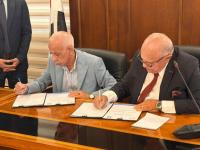
From the 12 to 24 hours ago segment, there is continuity in Egypt’s energy cooperation and industrial positioning. Egypt signed an agreement with Lebanon to rehabilitate Lebanon’s gas pipeline and infrastructure, presented as support for Lebanon’s energy sector and regional energy security, and linked to earlier Arab Gas Pipeline revival discussions involving Jordan, Syria, and Lebanon. The same period also includes Egypt’s first SAF facility financing (again, reinforcing that this is a current theme), alongside broader reporting on climate and food-system risks (e.g., deltas sinking faster and MENA food insecurity pressures), which provides background for why energy transition and resilience investments are being emphasized.
From 3 to 7 days ago, the evidence is sparser on Egypt-specific environmental policy but richer on institutional and infrastructure momentum. Multiple items point to Egypt’s ongoing economic and governance initiatives (including OECD cooperation and structural reports), and there are additional signals of energy and transport modernization (e.g., Egypt beginning a first monorail passenger service to boost “green mass transit,” and reports about new gas discoveries in the Nile Delta). Taken together, the recent cluster suggests Egypt is simultaneously pushing affordability and access (telecom pricing), expanding energy supply and technology capability (gas discovery and drilling methods), and advancing decarbonization-linked industrial projects (SAF facility), with regional cooperation (Lebanon gas infrastructure) reinforcing the energy-security angle.
Note: AI summary from news headlines; neutral sources weighted more to help reduce bias in the result.